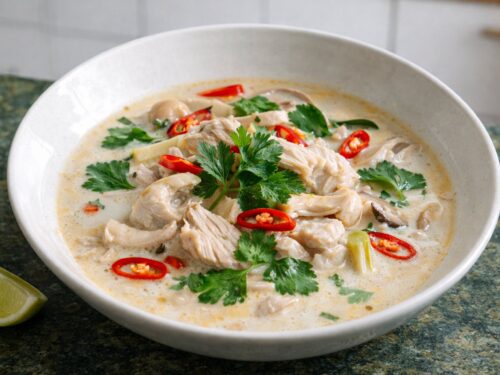
Creamy Galangal Coconut Chicken Soup (Tom Kha Gai)
Print Pin Servings 4 servings
Ingredients
Main Ingredients
- 500 g boneless chicken thighs cut into bite-sized pieces, skin-on if possible
- 150 g oyster mushrooms or king oyster mushrooms torn by hand into rough pieces
- 400 ml full-fat coconut milk one standard can, must be full-fat
- 200 ml chicken stock homemade or low-sodium carton, no added sugar or starch
Aromatics and Broth
- 4 slices fresh galangal 3–4mm thick, skin on
- 2 stalks lemongrass outer leaves removed, bruised, cut into 4cm pieces
- 6 kaffir lime leaves torn roughly, central stem removed
- 4 bird's eye chillies bruised, adjust to heat tolerance
- 2 tablespoons fish sauce check label for no added sugar or starch
- 1 tablespoon coconut oil or neutral oil
- 0.5 teaspoon erythritol sweetener keto substitute for palm sugar
- 1 lime juice only, added per bowl at serving, never into the pot
For Serving (Optional)
- fresh coriander leaves roughly torn
- 1 bird's eye chilli sliced thin for garnish
- cauliflower rice steamed, keto replacement for jasmine rice
- lime wedges extra, for serving
Instructions
Stage 1 — Prepare Your Aromatics
- Peel back the tough outer layers of each lemongrass stalk until you reach the pale, almost translucent inner core. Using the flat of a heavy knife, bash each stalk firmly — you'll hear a soft crack and immediately smell that clean, citrus-forward fragrance lift into the air. Cut into 4cm lengths.
- Slice the galangal across the grain into thick coins. No need to peel it — the skin holds flavour. You're infusing through these pieces, not eating them, so don't worry about how they look.
- Take your kaffir lime leaves and tear each one roughly down the middle, pulling away the thick central stem. Tearing rather than cutting opens up more surface area and releases more of the waxy, sharp oil locked inside the leaf.
- Bruise the bird's eye chillies by pressing the flat of a knife firmly down on each one — just enough to split them slightly without scattering all the seeds. You want the heat to bleed slowly into the broth, not explode into it.
Stage 2 — Build the Broth Base
- Heat a medium heavy-bottomed saucepan over medium heat. Add the coconut oil. When it shimmers — warm but not smoking — add the galangal slices. They should sizzle gently. Let them toast for about 30 seconds until the pan starts to smell faintly medicinal and warm.
- Add the lemongrass pieces and torn kaffir lime leaves. Stir gently and cook together for another 30–40 seconds, allowing the aromas to layer — galangal's sharp citrus note underneath, kaffir lime's more floral fragrance on top.
- Pour in the chicken stock first, then the coconut milk. The broth will transform from pale and thin into a rich, milky gold as the coconut milk fully incorporates. Turn the heat to medium-low.
- Add the bruised chillies. Let the broth simmer gently — small, lazy bubbles at the edge of the pan — for 10 minutes, allowing the aromatics to fully infuse. Do not let it boil aggressively. Coconut milk splits at high heat and becomes grainy and oily. Keep it calm.
Stage 3 — Cook the Chicken and Mushrooms
- Add the chicken pieces to the simmering broth. They should be mostly submerged. Keep the heat at medium-low and cook for 8–10 minutes. The chicken is done when it feels just firm under gentle pressure from a spoon — not hard, not giving. If unsure, cut a thick piece open — it should be white all the way through with no pink remaining.
- Add the torn mushrooms. They need only 3–4 minutes. Oyster mushrooms will soften quickly and soak up the broth — watch their edges shift from pale cream to a deeper, slightly golden colour as they cook through.
- Season with fish sauce, adding it gradually and tasting after each addition. The broth should taste salty first, then rich, then the warmth from the galangal and chilli builds slowly at the back of your throat. Add the erythritol now, stirring gently to dissolve. Taste and adjust — if the broth feels flat or dull, the answer is almost always a little more fish sauce.
Stage 4 — Serve Properly
- Ladle the soup into bowls. Remove the galangal, lemongrass, and kaffir lime leaves as you serve — or leave them in as visual decoration, but warn anyone at the table not to eat them. They are flavouring tools, not food.
- Add fresh coriander and sliced chilli on top. Squeeze lime juice directly into each bowl at the table — never into the pot. Acid added to hot coconut milk causes it to curdle and turn grainy. Added at the last moment into an individual bowl, the lime gives a bright, sharp lift that cuts through the richness cleanly.
- If serving with cauliflower rice, place the cauliflower rice in the bowl first and ladle the hot broth over it. It absorbs the broth beautifully, almost exactly the way jasmine rice would.
Calories 450kcal
Notes
Nutrition values are rough estimates per serving (recipe makes 3–4 servings) and will vary based on exact brands, portion sizes, and whether cauliflower rice is included. Values have not been calculated by a registered dietitian. Always use full-fat coconut milk — light versions produce a thin, watery broth. Never add lime juice to the hot pot; always squeeze directly into each bowl at the table. Leftovers keep in the fridge for 2–3 days; reheat gently over low heat and add a splash of chicken stock if the broth has thickened.