About Nook
Authentic Thai Keto Recipes From a Native Thai Cook Living Abroad
The first thing I remember about food is sound.
A knife striking a wooden board in quick rhythm. Garlic crushed under the flat side of a cleaver. Fresh chillies hitting hot oil and releasing that sharp heat into the air.
I was born in the south of Thailand and grew up in Bangkok in a home where the kitchen was never quiet. My grandmother didn’t cook from recipes. She cooked from instinct.
She tasted. Adjusted. Balanced.
That’s how I learned authentic Thai cooking—not by measuring, but by watching closely. By understanding how sweet, sour, salty, and spicy must work together. Thai food isn’t random heat. It’s precision.
Today, I teach people how to cook authentic Thai food in a keto and low-carb way — especially those living outside Thailand who crave real flavour but want to stay healthy.
From Thailand to Europe — And Learning to Adapt
In my late teens, I moved to the UK. My sister worked in a restaurant kitchen, and I spent hours observing how Thai food was prepared at scale.
Restaurant Thai food has its own logic. It’s often sweeter. Softer. Adjusted for the local palate.
I learned valuable techniques there — sourcing ingredients abroad, prepping efficiently, and adapting when something isn’t available. But when I began cooking for myself, I realised something important:
The Thai food I wanted to eat didn’t exist in restaurants.
So I cooked it myself.
Later, I moved to the Netherlands for work. Thai food here is often considered too bold or too spicy, so the flavours are toned down. I missed the balance I grew up with.
Cooking became my anchor again.
Colleagues started asking for Thai lunchboxes. Friends happily paid for them. I was happy to cook. Real Thai flavour travels well — when it’s done properly.
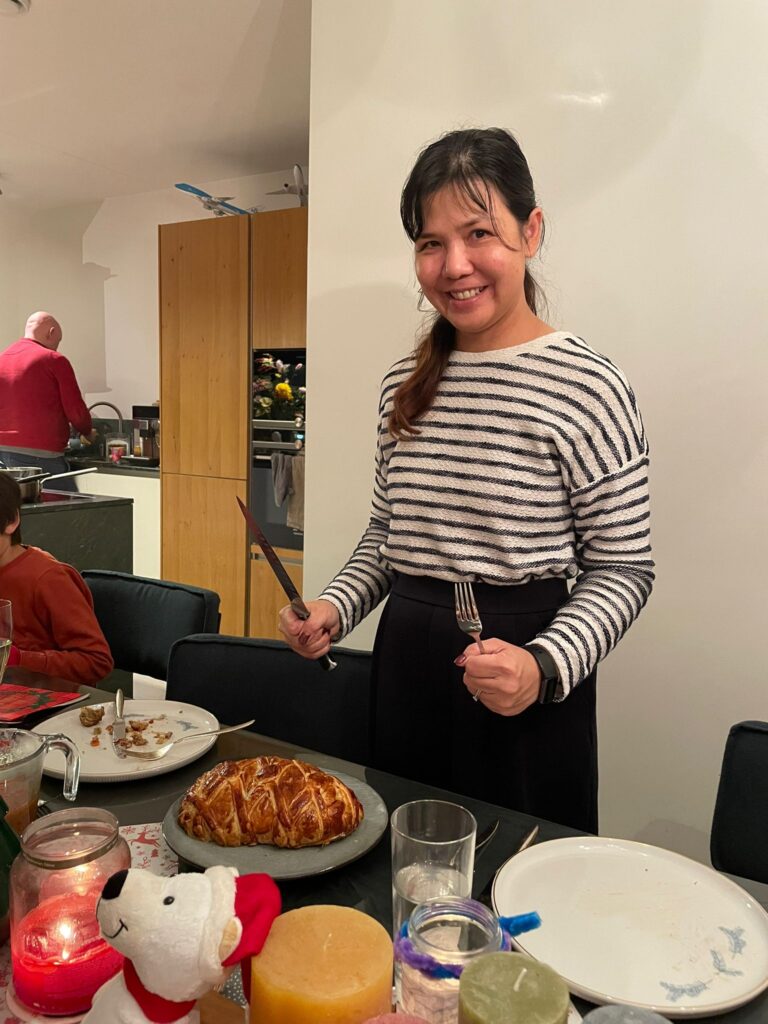
Now I live in the Netherlands with my Dutch husband (still in spice training) and our three children.
And then my health journey changed everything.
Why I Turned to Keto and Low-Carb
After medical treatment, I gained weight. Losing it was far more difficult than I expected.
That’s when I began researching keto and low-carb eating.
At first, it felt overwhelming.
Many Thai ingredients contain hidden sugar.
Oyster sauce. Curry pastes. Thai sausages. Marinades.
Even store-bought sauces labelled “savoury” can quietly increase carb counts.
On top of that, living outside Thailand makes sourcing both Thai and keto-friendly ingredients more complicated.
I didn’t want bland substitutions.
I didn’t want to give up Thai food.
So I rebuilt it.
Where Food Engineering Changed Everything
Here’s something that still makes me smile.
I graduated in Food Engineering because I thought I would learn more about cooking.
Instead, I studied food chemistry, heat transfer, ingredient functionality, food safety systems, and how sugar, starch, and protein behave during cooking.
It wasn’t traditional Thai cooking.
But it became incredibly useful.
When adapting Thai recipes for keto, I don’t just remove sugar. I analyse its function. Is it balancing acidity? Enhancing umami? Affecting texture?
Once you understand the science behind flavour, you can rebuild it intelligently.
After three years of consistent keto adaptation, I lost significant weight — while still eating Thai food I genuinely enjoy.
That’s when I knew this wasn’t just personal. It could help others.
Why I Created This Thai Keto Blog
I created this blog for people who:
• Live outside Thailand and miss authentic Thai food
• Want to follow a keto or low-carb lifestyle
• Feel confused about hidden carbs in Thai ingredients
• Refuse to eat flavorless “diet” food
Thai food is bold, layered, and balanced. It deserves respect — even when adapted for a low-carb lifestyle.
On this blog, you’ll learn how to cook authentic Thai dishes without rice, without hidden sugar, and without losing the flavour balance that defines Thai cuisine.
Every recipe is developed specifically for a keto and low-carb lifestyle, using ingredients available in Europe and Western supermarkets whenever possible.
What Makes My Approach Different
I am not reinventing Thai food.
I grew up inside it.
I understand how a proper Tom Yum should taste. I know when Pad Kra Pao is too sweet. I know when a curry lacks depth.
At the same time, I understand ingredient functionality and food science.
That combination matters.
When I create Thai keto recipes, I rebuild flavour structure — not just macros. I adjust acidity. I strengthen umami. I preserve texture. I test repeatedly.
This is authentic Thai low-carb cooking, not guesswork.
What You’ll Find Here
• Authentic Thai keto recipes
• Sugar-free Thai sauce alternatives
• Ingredient swaps that work in Europe and the West
• Guidance on hidden carbs in Thai cooking
• Practical meal ideas for Thai low-carb living
In the future, I’m working toward structured Thai keto meal plans and eventually a cookbook designed specifically for those living outside Thailand.
Because navigating Thai food and keto at the same time should not feel confusing.
A Note on Trust
If I recommend ingredients, tools, or products, it’s because I’ve tested them in my own kitchen.
I cook for my children.
For my husband.
For friends who trust my food.
If it doesn’t taste right, it doesn’t get published.
Trust is more important than trends.
Looking Ahead
My vision is to build a community for people who love Thai food but need it to fit a low-carb lifestyle.
A place where flavour is respected.
Where adaptation is intelligent.
Where Thai food remains bold — even without sugar and rice.
Thai food is not “too wild”.
It is balanced.
And yes, you can keep it while eating keto.
You just need someone who understands both worlds.
Welcome.